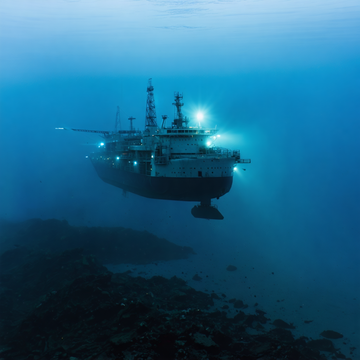
Deep-sea mining has become a test of whether national industrial policy can move faster than global ocean governance. On April 24, 2025, the White House ordered NOAA to expedite the review of seabed mineral exploration licenses and commercial recovery permits in areas beyond national jurisdiction. NOAA then finalized a new rule on January 21, 2026, replacing the old strictly sequential path with a consolidated application process for some applicants. Under that framework, a qualified company can seek both an exploration license and a commercial recovery permit together; if both are granted, the rule says commercial recovery could begin immediately. By late May 2026, NOAA’s public materials listed applications from TMC USA, American Metal Resources, SeaX, and American Deep Sea Minerals, while Lockheed Martin still held two exploration licenses first issued in 1984. NOAA also stated that no U.S. commercial recovery permit had yet been issued. (whitehouse.gov)
The complication is that the legal map of the deep ocean is not the same as the political one. NOAA notes that the United States is not a party to the Law of the Sea Convention, yet under the 1980 Deep Seabed Hard Mineral Resources Act it may still issue licenses and permits to U.S. companies operating beyond national jurisdiction. The International Seabed Authority, however, insists that no commercial exploitation has been approved anywhere in the Area because the mining code is still unfinished. At its March 2026 session, ISA member states discussed 29 of 32 outstanding issues, including benefit-sharing and a future Compliance Committee, and the Council is scheduled to resume negotiations from July 13 to 24, 2026. ISA has also warned that unilateral moves outside its framework raise rule-of-law concerns and challenge the principle that the seabed beyond national jurisdiction is the “common heritage of humankind.” (oceanservice.noaa.gov)
What makes the dispute especially charged is that the science is still sobering. NOAA’s 2025 fact sheet says no commercial-scale deep-sea mining has yet taken place anywhere in the world, even though at least 37 of the 50 U.S. critical minerals are found in seafloor deposits. Recent peer-reviewed studies add to the caution: one Nature paper reported that physical changes from a mining disturbance in the Clarion-Clipperton Zone were still visible 44 years later, while another measured near-bottom sediment plumes extending kilometers from a collector test and sediment redeposition of roughly three centimeters near mining lanes. In other words, the present contest is not merely about who reaches nickel, cobalt, and copper first; it is about whether humanity can write credible rules before extraction ceases to be hypothetical. (repository.library.noaa.gov)