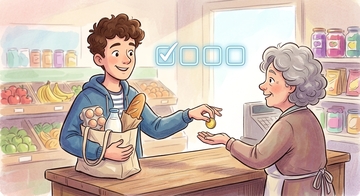
Some food shops let you buy now and pay later. (paypal.com)
Tom needs rice, milk, and eggs. He has little money today. He pays some money now. He takes the food home. He pays more money later. This can help Tom. But he must pay it all.
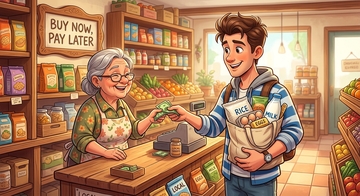
Some food shops let you buy now and pay later. (paypal.com)
Tom needs rice, milk, and eggs. He has little money today. He pays some money now. He takes the food home. He pays more money later. This can help Tom. But he must pay it all.
食べ物のお店の中には、今買って、あとで払える店があります。
トムはお米、牛乳、たまごが必要です。今日はお金が少ししかありません。彼は今、いくらかお金をはらいます。食べ物を家に持って帰ります。あとで、もっとお金をはらいます。これはトムの助けになります。でも、彼はぜんぶはらわなければなりません。
三人称単数(he, she, it)が主語のとき、現在形の動詞にsをつけます。
e.g. He pays some money now.
訳: 彼は今、いくらかお金をはらいます。
「〜しなければならない」という義務を表します。
e.g. He must pay it all.
訳: 彼はぜんぶはらわなければなりません。
お店
e.g. The food shop is open.
訳: 食べ物のお店は開いています。
お米、ごはん
e.g. I eat rice.
訳: わたしはお米を食べます。
牛乳
e.g. Tom needs milk.
訳: トムは牛乳が必要です。
たまご(複数)
e.g. He buys eggs.
訳: 彼はたまごを買います。
お金
e.g. He has little money.
訳: 彼はお金が少ししかありません。
あとで
e.g. He pays later.
訳: 彼はあとではらいます。
今買って、あとでお金をはらう
e.g. You can buy now and pay later.
訳: 今買って、あとではらうことができます。
〜を家に持って帰る
e.g. He takes the food home.
訳: 彼は食べ物を家に持って帰ります。
ぜんぶをはらう
e.g. He must pay it all.
訳: 彼はぜんぶはらわなければなりません。