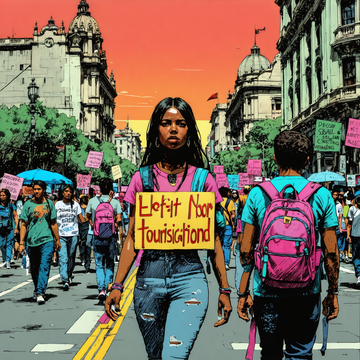
In Mexico City, the phrase “digital nomad” no longer sounds trendy to everyone. On February 27, 2026, activists marched to the city’s Tourism Secretariat to protest what they called gentrification and “touristification” ahead of the 2026 FIFA World Cup. According to the Reuters Connect report, demonstrators pointed to rising rents in central and southern neighborhoods, as well as higher water costs, as signs that everyday life is becoming harder for residents. (reutersconnect.com)
The frustration had already exploded months earlier. In July 2025, hundreds of people marched through areas such as Roma and Condesa, neighborhoods popular with tourists, remote workers, and short-term renters. AP reported that many residents felt they were being priced out of their own communities, and critics linked the anger partly to a 2022 agreement, signed when Claudia Sheinbaum was mayor, between Mexico City, Airbnb, and UNESCO to promote the capital and attract digital nomads. Sheinbaum later condemned xenophobic behavior seen during the protests, showing how quickly a housing debate can become emotionally charged. (apnews.com)
What makes this issue especially complicated is the blurry line between tourism and temporary migration. A visitor who stays for a weekend usually feels harmless. A remote worker who stays for three months, pays in dollars, and rents through a digital platform may also see themselves as harmless. But for many local residents, that person is no longer just a tourist; they are part of a new housing economy that changes prices, shops, and even the social atmosphere of a neighborhood. That perception helps explain why “digital nomad fatigue” has grown in a city that still depends heavily on visitors. (apnews.com)
City authorities have tried to respond. In July 2025, Mayor Clara Brugada launched a public rental-housing program that aims to offer 1,000 homes in central areas first and eventually 20,000 during her term. Soon after, her government announced a broader anti-gentrification consultation that included plans for a rental price index, tighter rules for temporary lodging platforms, and a public office to defend tenants’ rights. The pressure may only grow, since FIFA has confirmed that Mexico City will host the opening match of the 2026 World Cup on June 11, 2026. Mexico City, in other words, is trying to answer a difficult question: how can a global city welcome the world without slowly pushing out the people who make it worth visiting? (jefaturadegobierno.cdmx.gob.mx)