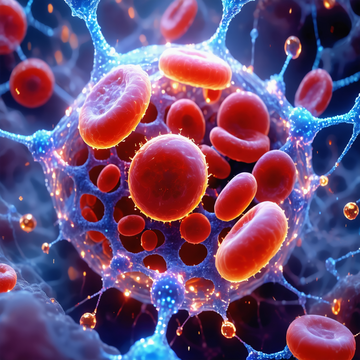
A new study published in Nature on April 29, 2026 describes an engineered blood clot that can stop bleeding in seconds. The work was led by researchers at McGill University with collaborators in Canada and the United States. Instead of relying only on the body’s normal clotting system, the team used a fast, biocompatible “click” reaction to link proteins on the surface of red blood cells and turn them into a strong gel-like material. (nature.com)
This idea is surprising because red blood cells are usually not seen as the main builders of a clot. In this method, however, they become part of the clot’s structure. The Nature paper says the engineered blood clots formed within seconds, were 13 times tougher than natural clots, and showed four times greater adhesion energy. McGill’s release says the gel formed in about five seconds. The researchers also report that the method can use either a patient’s own blood or type-matched donor blood, which could make it useful in different emergency situations. (nature.com)
The research is exciting, but it is still at an early stage. The team tested the technology in the lab and in rodents, not in human patients. In those animal studies, the clots quickly controlled bleeding and also supported healing. In a liver injury model, the paper reports nearly complete healing with little inflammation or scarring, while the comparison product showed more fibrosis and caused organ adhesion. McGill also reported no toxicity in major organs, but the researchers clearly say that more study is needed before this can be used in real hospitals. If future human trials go well, this artificial clot could become a powerful new tool in emergency medicine. (nature.com)