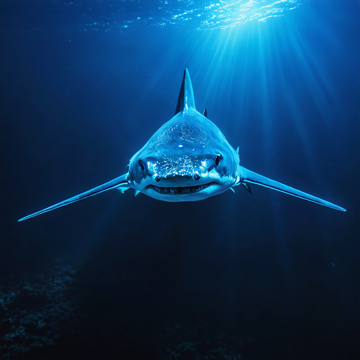
Have you ever looked into a dark room and wondered, what is moving in there? That feeling is a little like the deep ocean.
In June 2026, scientists shared the first confirmed video of a goblin shark alive in its natural deep-ocean home. The new study in the Journal of Fish Biology says there were two live sightings in the Pacific Ocean: one near Jarvis Island in 2019, and one in the Tonga Trench in 2024. (onlinelibrary.wiley.com)
The goblin shark is a rare deep-sea shark first described from Japan in 1898. It has a long, flat nose, and its jaws can shoot forward very fast to catch food, almost like a slingshot. Earlier videos showed feeding only after sharks had been caught and brought up from deep water, not while they were living freely in their real home. (nature.com)
Here is the part I keep thinking about. One shark was filmed at 1,237 meters deep near Jarvis Island. The other was filmed at 1,997 meters in the Tonga Trench, about 700 meters deeper than scientists had known before for goblin sharks. (oceanographicmagazine.com)
Think about losing your house key in a huge dark park, then finding it in a twenty-second phone video. That is a little like this discovery. One report says the Tonga shark appeared for only a little over 20 seconds, even after more than 50 days of filming. (oceanographicmagazine.com)
So the turn in this story is simple. The deep sea still hides famous animals from us. Even a shark people have known for more than 100 years can suddenly look new again. Maybe the next big surprise is already swimming in the dark, just outside the camera light. (nature.com)