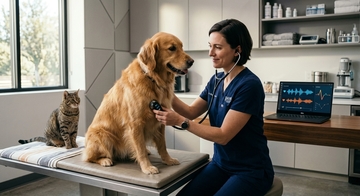
A stethoscope helps a vet listen to an animal’s heart. A digital stethoscope also records the sound. AI then looks for unusual sound patterns. One important pattern is a heart murmur. A murmur is an extra sound made by moving blood.
Can this tool really help dogs and cats? A recent hospital study gives a mixed answer. The AI found most murmurs in dogs. Its result was similar to a senior veterinary student’s result. However, it found very few murmurs in cats. It also gave unreliable answers about uneven heartbeats. (pubmed.ncbi.nlm.nih.gov)
For example, imagine a dog and a cat at a clinic. Both have a heart murmur. The AI may warn the vet about the dog. But it may say nothing about the cat. It may also report a problem that is not there.
Other research on dogs has shown stronger results. A dog-only system found murmurs with high accuracy in its test. This shows that training data and animal type matter. (pubmed.ncbi.nlm.nih.gov)
So, the AI stethoscope can be a useful helper. It can record sounds and support a vet’s first check. But it cannot replace a full exam. Cats are still a difficult test for this technology.