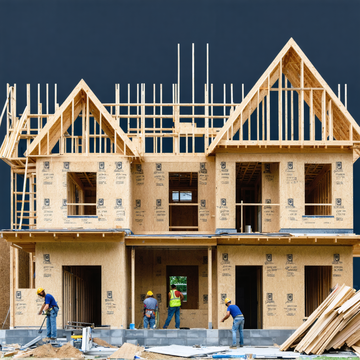
The most striking finding in a February 17, 2026 letter from the Federal Reserve Bank of San Francisco is not simply that unauthorized immigration affects local labor markets, but that the effect appears to be almost one-for-one. Using local data, the authors estimate that when unauthorized immigrant worker flows rise by an amount equal to 1% of local employment, total local employment rises by about 0.92%; during the later slowdown, the estimate is 1.16%. Construction stands out in the second period: places that saw the sharpest slowdown in these worker flows also saw especially large slowdowns in construction employment. The authors explicitly warn that this pattern could restrain residential building and, in turn, slow housing-supply growth. (frbsf.org)
Why construction? Because it is unusually dependent on immigrant labor in the exact trades that make homes physically possible. The National Association of Home Builders says immigrants make up about one in four workers in construction overall, but 32.5% of construction tradesmen. In several key occupations, the shares are even higher: 61% for drywall and ceiling tile installers, 52% for roofers, 51% for painters, and 45% for carpet, floor, and tile installers. NAHB also notes that roughly a third of carpenters and 42% of construction laborers are foreign-born, even though these jobs already register persistent shortages. In high-growth states, dependence is deeper still: immigrants account for 41% of California’s construction workforce and 38% in both Texas and Florida. (nahb.org)
That is why a decline in unauthorized immigration can shake more than payroll numbers. It can disrupt the timing of housing itself. Construction still had about 292,000 job openings in December 2025, according to BLS data, suggesting that labor demand remained substantial even as the broader job market cooled. Meanwhile, the Census Bureau reported that in January 2026 building permits fell 5.4% from December, and single-family housing starts fell 2.8%, although total starts rose on multifamily volatility. Interest rates, regulation, and materials costs obviously matter too; however, when fewer workers are available for framing, roofing, drywall, and finishing, the housing pipeline becomes slower and more fragile. In a country already struggling with affordability, delay is not a side issue. It is part of the shortage. (bls.gov)