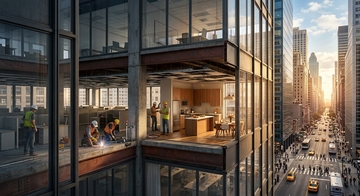
Imagine cooking dinner in a room that used to be full of desks and meetings. In many American cities, this idea is becoming real. Since the pandemic, many office buildings have stayed partly empty, so developers are trying to turn them into homes. At the start of 2026, about 90,300 apartments were in the office-to-housing pipeline across the United States, up 28% from a year earlier. City leaders hope these projects can add much-needed housing and bring more life back to quiet downtown areas. (linkedin.com)
New York City is one of the biggest examples. A former Pfizer office complex in Midtown Manhattan is being changed into about 1,600 apartments. New York has also changed some rules and offered tax support to make more projects possible. According to the New York City comptroller, as of early 2025, 44 office conversion projects in the city had been completed, were underway, or could move forward. Together, they could create more than 17,000 homes. (apnews.com)
Still, an empty office cannot automatically become a good home. Apartments need sunlight, windows, kitchens, bathrooms, and many water pipes in places where offices usually do not have them. Some office floors are too large and too dark in the middle. Gensler, a major architecture firm, says it has studied more than 1,300 buildings in 170 cities, but only about 30% looked suitable for conversion. In July 2026, work at the Pfizer project stopped for a time after steel columns buckled, showing how difficult these projects can be. Experts told AP, however, that such failures are rare and do not mean cities should give up on conversions. (gensler.com)
Even with these problems, the movement is growing. Washington, D.C., said in its 2025/2026 development report that conversion projects had already delivered more than 3,330 homes in the previous two years, and 14 more projects were underway. Reusing old buildings can also save demolition costs and reduce waste. So, can an empty office become a home? Not always. But in cities that need both housing and a more active downtown, it may become an important part of the answer. (wdcep.com)