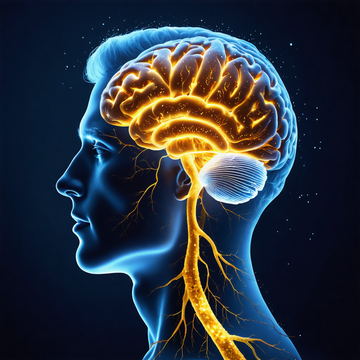
Does the ageing brain begin in the gut? A Nature study published on March 11, 2026, suggests that, in mice, memory decline may start surprisingly far from the brain itself. The researchers argue that ageing weakens “interoception” — the brain’s ability to read signals from inside the body — and that the intestine is a crucial part of this process. In other words, forgetfulness may not be only a problem of worn-out brain cells; it may also reflect failing communication between gut, immune system, nerves and hippocampus, the brain region central to memory formation. (nature.com)
The mechanism they describe is strikingly concrete. As mice age, certain gut microbes become more common, especially Parabacteroides goldsteinii. These bacteria increase medium-chain fatty acids, which activate the immune receptor GPR84 on peripheral myeloid cells. That inflammatory response then disrupts vagal sensory signalling from the gut to the brain, weakens hippocampal activity and reduces memory performance. So the chain is: ageing gut microbiome, local inflammation, weaker vagus-nerve input, poorer hippocampal encoding. It is an elegant reminder that the brain does not age in isolation. (nature.com)
What makes the paper especially exciting is that the decline was not simply observed; in several mouse experiments, it was partly reversed. Young mice exposed to an “old” microbiome performed worse on memory tasks, while germ-free mice were protected for longer. The team also improved cognition in aged mice by removing or altering harmful microbes, blocking GPR84 with PBI-4050, or restoring gut-to-brain signalling through vagal activation. Nature’s accompanying News & Views summarized the central message neatly: age-related microbiome shifts can impair cognition by damaging this gut–brain pathway, but the pathway is also potentially treatable. (nature.com)
Still, the most important caution is this: the work was done in mice, not humans. The authors explicitly note that it remains unknown whether the same pathway contributes to age-related cognitive decline in people. Even so, the study opens an intriguing possibility. If future research confirms a similar circuit in humans, protecting memory might involve not only brain drugs, but also gut-targeted therapies — perhaps microbial, immune or vagal interventions that help the brain hear the body more clearly again. (nature.com)