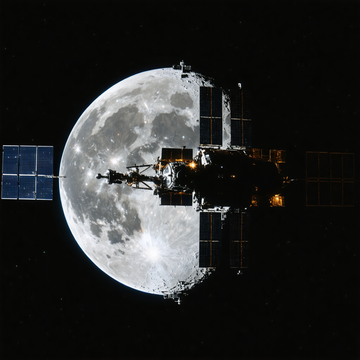
In April 2026, Artemis II turned a long-awaited plan into reality. NASA launched the mission on April 1, 2026, and the Orion spacecraft returned safely to Earth on April 10, splashing down in the Pacific after a journey of nearly 10 days. For the first time since Apollo 17 in December 1972, human beings traveled to the Moon and back. The four-person crew—Reid Wiseman, Victor Glover, Christina Koch, and Canada’s Jeremy Hansen—made the flight historic in another way as well: it included the first woman, the first person of color, and the first Canadian ever assigned to a lunar mission. (nasa.gov)
What made Artemis II so important was not only where it went, but what it tested. This was NASA’s first crewed Artemis mission and the first time astronauts used Orion’s life-support systems in deep space. During the mission, the crew practiced manual piloting, carried out proximity operations after launch, and followed a free-return path around the Moon—a route that naturally brings the spacecraft back toward Earth. On April 6, the astronauts completed a lunar flyby, passed behind the Moon, temporarily lost contact with Earth, and photographed the far side, along with dramatic views of “earthset” and “earthrise.” (nasa.gov)
Artemis II also showed that modern lunar exploration is deeply international. Orion’s European Service Module, built through ESA, supplied power, propulsion, and key life-support functions for the crew. Canada was represented not only symbolically but directly through Hansen’s seat on board. That international teamwork matters because Artemis is not designed as a single heroic trip. It is meant to build a lasting system for exploration. (esa.int)
That is why Artemis II feels like the opening chapter of a new age. In February 2026, NASA said Artemis III is now planned for 2027 as a test mission in low Earth orbit with commercial lunar landers, while Artemis IV is targeted for a lunar landing in 2028. In other words, Artemis II was more than a celebration of the past. It was a successful rehearsal for a future in which journeys to the Moon may become regular again—and eventually lead humans onward to Mars. (nasa.gov)