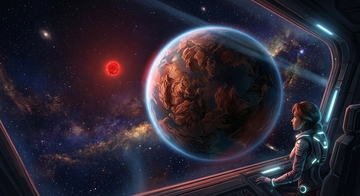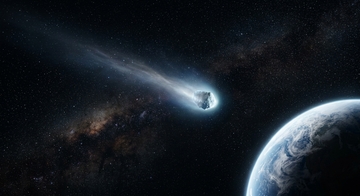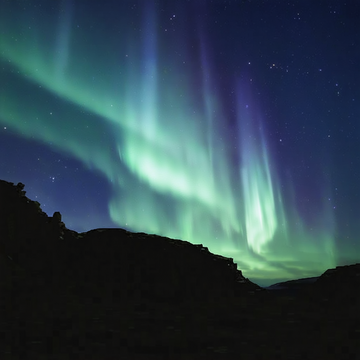
A solar superstorm on Mars might create a beautiful sky, but it would also be a serious danger for future astronauts. NASA has already shown that some auroras on Mars could be visible to human eyes. But when a major storm hit Mars in May 2024, the result was not only light in the sky. On March 5, 2026, ESA reported that its Mars orbiters were hit by a radiation dose equal to about 200 normal days in only 64 hours, and one layer of the upper atmosphere saw electron numbers jump by 278%. Scientists called it the biggest response to a solar storm ever seen at Mars. (jpl.nasa.gov)
Mars is especially vulnerable because it does not have Earth’s strong global magnetic shield, and its atmosphere is much thinner. That means harmful particles from the Sun can reach the planet more easily. NASA says that if astronauts had been standing next to the Curiosity rover during the May 20, 2024 event, they would have received 8,100 micrograys of radiation, about the same as 30 chest X-rays. NASA also warned that the dose would be even higher in Mars orbit or in deep space, where there is less natural protection. (nasa.gov)
What does that mean for people? According to NASA, space radiation can raise the risk of cancer later in life and may also harm the heart, blood vessels, eyes, and central nervous system. A superstorm can also hurt the machines astronauts depend on. During the 2024 storm, ESA’s Mars orbiters had computer errors, and NASA’s Mars Odyssey briefly lost its star camera after being flooded by energetic particles. (nasa.gov)
The good news is that protection is possible. NASA says cliffsides or lava tubes on Mars could give astronauts extra shielding, and space-weather teams already send Mars storm alerts so missions can prepare. A 2025 study estimated that the May 2024 event gave the Martian surface a neutron dose of about 600 μSv, but a much stronger Carrington-like event could reach 240 mSv — above the annual limit referenced in that paper for NASA’s Orion astronauts. For future Mars explorers, the lesson is simple: on the Red Planet, the Sun may be one of the most dangerous enemies of all. (jpl.nasa.gov)