On April 1, 2026, NASA’s Artemis II mission lifted off from Kennedy Space Center in Florida. Four astronauts were on board: Reid Wiseman, Victor Glover, Christina Koch, and Canada’s Jeremy Hansen. They flew in the Orion spacecraft on NASA’s huge SLS rocket. This was the first human trip around the Moon in more than 50 years, and the first time people flew on SLS and Orion together. (nasa.gov)
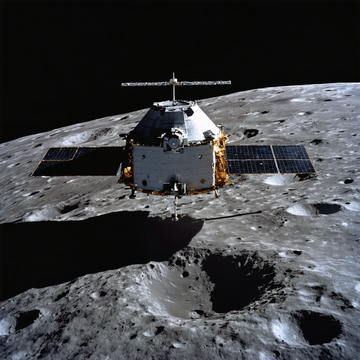
The mission lasted about 10 days. After leaving Earth orbit, Orion headed for the Moon. On April 6, the crew flew behind the Moon and came as close as about 4,067 miles above its surface. The astronauts took clear photos and studied the lunar surface, including parts of the far side. During the trip, Artemis II also broke the old record for the farthest distance humans have traveled from Earth. (nasa.gov)
This flight was special for another reason too. Jeremy Hansen became the first Canadian to travel around the Moon. NASA also used Artemis II to test important systems with astronauts on board, such as life support and deep-space operations. In other words, this was not only an exciting journey. It was also a big practice mission for future trips deeper into space. (asc-csa.gc.ca)
Then came the trip home. On April 10, 2026, Orion splashed down in the Pacific Ocean off the coast of California near San Diego at 5:07 p.m. PDT. At its farthest point, the crew was 252,756 miles from Earth, and the whole mission covered 694,481 miles. Artemis II did not land on the Moon, but it showed that humans can travel around it safely again. For many people, that makes this mission both historic and inspiring. (nasa.gov)