In April 2026, the European Commission and the Fundació Mies van der Rohe announced the winners of the EU Prize for Contemporary Architecture. The main prize went to Charleroi Palais des Expositions in Belgium, a renovation of a huge 1950s exhibition building. The Emerging Architecture prize went to the Temporary National Theatre in Ljubljana, Slovenia, where architects turned a former industrial hall into a public theatre while the city’s historic theatre is being renovated. The first striking fact is this: both winning projects gave old buildings a new life instead of replacing them. (culture.ec.europa.eu)
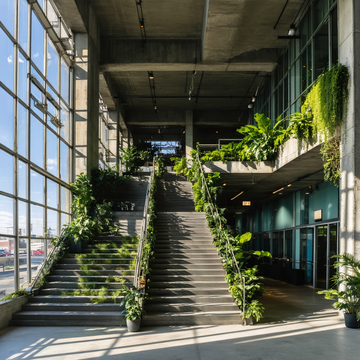
This makes the 2026 edition feel especially meaningful. The award did not celebrate flashy new construction. Instead, it highlighted architecture that works with what already exists. In Charleroi, the old structure was opened up, public space was extended inside, and hard paved ground outside was changed into a green park. In Ljubljana, low-cost and flexible changes transformed an empty hall into a lively cultural space. These projects show that limits such as age, budget, and existing materials can become creative advantages. (culture.ec.europa.eu)
The wider selection points in the same direction. The 2026 prize began with 410 nominated works from 40 countries, then narrowed them to 40 shortlisted projects and seven finalists. The finalists list itself suggests how strong the renovation trend has become: four of the five architecture finalists were classified as regeneration projects, including works in Charleroi, Terrassa, Arles, and Dubrovnik, and one of the two emerging finalists reused an industrial building. Even the EUmies Awards Days in Barcelona on May 11-12, 2026 are built around panels called “Reuse as Transformation,” “Reuse as Resource,” “Reuse as Energy,” and “Reuse as Cultural Practice.” (eumiesawards.com)
A useful phrase here is “adaptive reuse,” which means giving an old building a new purpose. The 2026 EU Mies Award suggests that today’s architects are being praised not only for building well, but also for repairing well, saving materials, and keeping cities connected to their memories. In that sense, the future of architecture may be less about starting from zero and more about seeing hidden value in what is already there. (culture.ec.europa.eu)