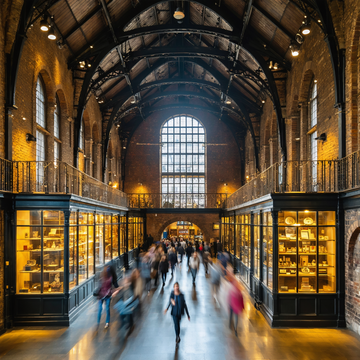
In London, an old market is becoming a new museum because the place already carries the story of the city. Smithfield has a very long past. The area was a Roman cemetery, later a place for fairs and public events, and from the 1170s it was known as a busy market. For more than 800 years, people came here to trade, work, eat, and meet. That rich history makes Smithfield a strong home for a museum about London itself. (londonmuseum.org.uk)
The new museum will use the historic General Market building, a Victorian market hall that had stood empty for decades. London Museum says this project brings the old building back into public use for the first time in over 30 years. The permanent galleries are now set to open on 28 November 2026, and the nearby Poultry Market building will open later, in 2028, with temporary exhibitions, learning spaces, and collection stores. (londonmuseum.org.uk)
There is another important reason for the move: space. London Museum has more than seven million objects, and the new site will show more of them than ever before. Visitors will see displays about London from ancient times to today, including Roman writing tablets, famous historical objects, and even unusual modern items such as the Whitechapel Fatberg. The museum also wants to be more than a quiet place to look at objects. Its plans include social spaces, events, food programs, and areas where Londoners can gather and share their own stories. (londonmuseum.org.uk)
So, why does an old market become a new museum? Because the building is not just old; it is meaningful. Smithfield was built for movement, trade, and human activity, and the new museum wants to keep that energy alive. Instead of losing these historic market buildings, London is giving them a new job: helping people understand the city’s past, present, and future. (londonmuseum.org.uk)