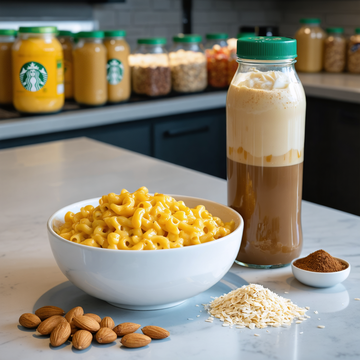
In the U.S., protein is no longer just for athletes or people who drink shakes after the gym. It is now showing up in comfort foods and everyday drinks. On March 17, 2026, Kraft Heinz announced Kraft Mac & Cheese PowerMac, a new version of its famous boxed meal. It has 17 grams of protein and 6 grams of fiber per serving, and it comes in Original and White Cheddar. The company said it spent nearly a year developing the product so it would still taste like classic Kraft mac and cheese. (news.kraftheinzcompany.com)
Coffee is changing, too. Starbucks added protein options to its menu in September 2025, allowing customers to add Protein-boosted Milk or Protein Cold Foam to about 90% of its drinks. Then, on February 26, 2026, Starbucks announced bottled Starbucks Coffee & Protein drinks for grocery stores, launching on March 23. These ready-to-drink bottles contain 22 grams of complete protein, 5 grams of prebiotic fiber, five vitamins and minerals, and just 2 grams of sugar. (about.starbucks.com)
Why is this happening? Because many Americans are actively looking for more protein. According to the 2025 IFIC Food & Health Survey, “high protein” was the most common eating pattern followed in the past year, and “good source of protein” became the top way consumers defined a healthy food. In a separate IFIC Spotlight Survey, 35% of people said they had increased their protein intake. In other words, food companies are not simply creating a trend—they are reacting to one. (ific.org)
Still, more protein does not automatically mean a food is healthy. The 2025–2030 Dietary Guidelines for Americans say healthy eating should focus on whole, nutrient-dense foods and reduce highly processed foods. USDA’s MyPlate also recommends choosing a variety of protein sources and limiting options high in sodium or saturated fat. So the protein boom is real, and it may make some foods more filling. But the smartest idea is not just to eat more protein—it is to choose better protein in better foods. (odphp.health.gov)