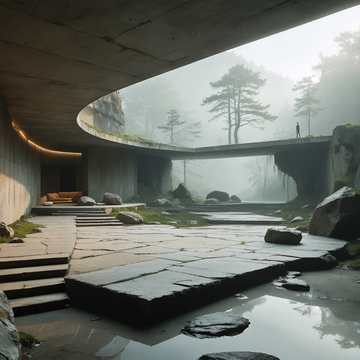
In 2026, the Pritzker Architecture Prize was awarded to Smiljan Radić Clarke of Santiago, Chile. The jury did not celebrate him for flashy shapes or loud visual effects. Instead, it praised his “quiet emotional intelligence” and said his buildings offer “quietly joyful shelter.” Those words are important. They suggest that one of architecture’s highest honors is recognizing a different kind of strength: buildings that protect people, slow them down, and make them feel more aware of light, sound, weather, and time. In that sense, the 2026 prize shows the power of “quiet architecture.” (pritzkerprize.com)
Radić’s work is quiet not because it is weak, but because it is careful. The Pritzker materials say he avoids a repeatable style and lets each project grow from its site, history, and use. In Pite House in Chile, the building is shaped to give shelter from wind and harsh light. At the Serpentine Pavilion in London, a light fiberglass shell rested on large stones, creating a space that felt open and protected at the same time. In House for the Poem of the Right Angle, small openings guide attention upward, encouraging stillness and reflection. These projects do not shout. They create mood through restraint. (pritzkerprize.com)
That is why this award feels meaningful beyond architecture itself. Radić says he tries to create experiences with “emotional presence,” inviting people to pause and reconsider a world that often passes by “with indifference.” The jury also says his buildings are not just objects to look at; they demand real, physical presence. This is an important lesson for our image-heavy age. A building does not need to be spectacular to be memorable. Sometimes the most powerful spaces are the ones that feel safe, human, and deeply alive in silence. (pritzkerprize.com)