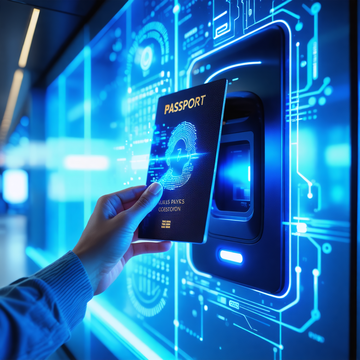
A trip through Europe used to leave a visible trail: a stamp from Madrid, another from Athens, a small gallery of ink inside your passport. That ritual is now fading. The EU-led Entry/Exit System, or EES, began rolling out on October 12, 2025 and became fully operational across the Schengen area’s external borders on April 10, 2026. For non-EU visitors on short stays, manual passport stamping has been replaced by digital registration. At a first crossing, border officers record passport details, take a facial image, and scan fingerprints; after that, repeat checks can be quicker, especially where self-service systems are available for biometric-passport holders. (consilium.europa.eu)
For travelers, the biggest change is not only technical but psychological. The famous “90 days in any 180-day period” rule has not changed, but now the counting is automatic. The EES records each entry and exit across the participating countries as part of one shared short-stay calculation, so moving from France to Italy to Greece does not magically reset the clock. That may make border control feel stricter, and first-time registration may take a little longer, but it also promises fewer arguments over faint stamps, missing pages, or human error. In other words, Europe is becoming less paper-based and more data-driven. (consilium.europa.eu)
And this is only phase one. The separate ETIAS travel authorisation for visa-exempt visitors is still not operating; according to official EU information, it is scheduled for the last quarter of 2026, and the exact launch date will be announced several months in advance. When it arrives, ETIAS will be an online pre-travel requirement, not a visa, with a fee of €20 and validity of up to three years or until the passport expires. So the future of European travel is not stamp-free and effortless; it is stamp-free and pre-screened. The souvenir ink is disappearing, but in its place comes a new reality: travel that is faster in appearance, deeper in surveillance, and unmistakably digital. (travel-europe.europa.eu)