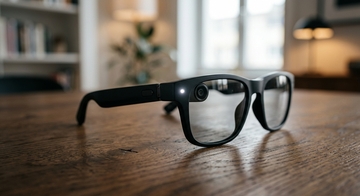
Smart glasses look normal, but they have cameras and computer tools. They can take photos without using your hands. They can also use AI to answer simple questions. But nearby people may not know when filming starts.
Meta recently announced stronger privacy protection for its AI glasses. A small white “capture light” blinks during photos and videos. This light shows others that the camera is working. It has no off switch. (about.fb.com)
The glasses already stop the camera when someone covers this light. New software also checks if someone changes or breaks it. If the glasses find such damage, the camera stops. Then users cannot take photos or videos. (about.fb.com)
Imagine Emma wants to film quietly on a train. She puts black tape over the white light. The glasses notice that the light is covered. The camera turns off, so Emma cannot record. Other passengers can feel safer.
This idea is simple, but it matters. Wearable cameras are small and easy to miss. A clear light gives people useful information. Stopping the camera makes the warning harder to hide. Trust may decide whether AI glasses enter daily life.