What Is Daylight Saving Time?
Daylight saving time is a rule in the United States. People call it DST. During DST, people move the clock forward one hour. DST starts in spring and ends in fall.
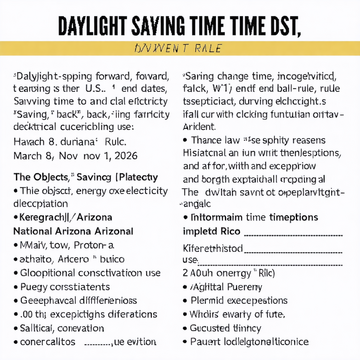
In 2026, DST starts on March 8 at 2 a.m. At that time, the clock moves forward from 2 a.m. to 3 a.m. It means the day is only 23 hours. DST ends on November 1 at 2 a.m. People set the clock back one hour. Then the day is 25 hours.
Many people in the U.S. remember this rule: "Spring forward, fall back." In spring, you move the clock forward. In fall, you set the clock back.
Why Do We Move the Clock Forward?
Why do we move the clock forward? The U.S. began DST in 1918. It was during World War I. The country wanted to save electricity. With more daylight in the evening, people did not need to use as much energy.
Today, the idea is the same. A law from 2005 says DST goes from the second Sunday in March to the first Sunday in November. That is about eight months — from March to November.
Not All of the U.S. Uses DST
Not all parts of the U.S. use daylight saving time. Hawaii does not use it. Some islands like Puerto Rico, Guam, and the U.S. Virgin Islands do not use it. Most of Arizona does not use it. So the time is not the same in every area of the country.
Some people want to change the law. They want DST all year. But this new law has not started yet. In March 2026, it is still just news.
DST and English Learning
If you are learning English, it is good to know about DST. You can hear "spring forward" and "daylight saving time" in the news and in daily life. Knowing about DST helps you feel closer to American culture.