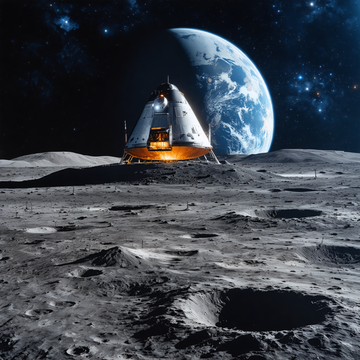
Artemis II has made history. NASA’s mission launched on April 1, 2026, from Kennedy Space Center in Florida. It was the first crewed flight around the Moon in more than 50 years. Four astronauts flew on the Orion spacecraft: Reid Wiseman, Victor Glover, Christina Koch, and Jeremy Hansen from the Canadian Space Agency. The mission was also the first crewed test flight of NASA’s powerful SLS rocket and Orion spacecraft. (nasa.gov)
The journey was short, but very important. Artemis II lasted 9 days, 1 hour, and 32 minutes, ending with a splashdown in the Pacific Ocean on April 10, 2026. At its farthest point, the crew traveled 252,756 miles from Earth, farther than any humans had gone before, beating the old Apollo 13 record from 1970. During the lunar flyby on April 6, Orion came as close as 4,067 miles above the Moon’s surface. (nasa.gov)
This mission was not only about adventure. It was a test for future Moon missions. The astronauts checked Orion’s life support systems, which must keep people safe in deep space. They also practiced flying the spacecraft by hand and tested spacesuits, emergency tools, and other important systems. NASA will use this information to prepare for Artemis III and later missions to the Moon. (nasa.gov)
Artemis II also gave people amazing new views of space. The crew took more than 7,000 pictures of the Moon and even saw a solar eclipse from Orion, with the Moon blocking the Sun. They photographed craters, lava plains, earthrise, and earthset. For many people, Artemis II feels like the start of a new space age. More than 50 years after Apollo, humans have returned to the Moon’s neighborhood—and this time, NASA says the goal is not only to visit, but to stay and learn more. (nasa.gov)