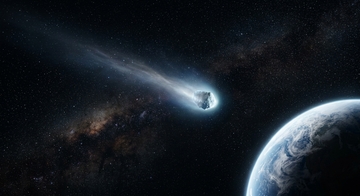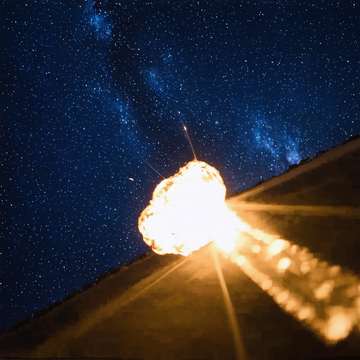
A surprising space story happened over Europe on Sunday, March 8, 2026. At about 18:55 CET, people in Belgium, France, Germany, Luxembourg, and the Netherlands saw a very bright fireball cross the sky from southwest to northeast. It shone for about six seconds, left a glowing trail, and then broke into pieces. ESA says that at least one house in Koblenz-Güls, Germany, was hit by small meteorite pieces. Thankfully, there were no reports of injuries. (esa.int)
This event is also a good English lesson in space words. A small rock in space is called a meteoroid. When it enters Earth’s atmosphere and makes a bright streak of light, it is called a meteor. If part of it survives and reaches the ground, it becomes a meteorite. NASA explains that a fireball is an especially bright meteor. ESA currently thinks the March 8 object was up to a few metres wide before it entered the atmosphere. (science.nasa.gov)
Scientists learned a lot from this fireball. ESA says many meteor cameras and ordinary phones recorded it. But cameras were not the only tools. In Luxembourg, researchers used seismic stations, which normally listen for ground vibrations, to detect the pressure wave from the meteor. Their analysis showed that the object crossed Luxembourg and burst just before reaching Koblenz. Researchers at KIT in Germany also used seismometers and calculated a very precise path. They say this method is useful because there are more earthquake stations than special meteor cameras, and seismic data can still help even when daylight or clouds make sky watching difficult. (esa.int)
Why does this matter? ESA says objects of this size hit Earth from once every few weeks to once every few years. This one was probably missed by large telescope surveys because it came from a brighter part of the sky around dusk. ESA notes that only 11 natural space objects have been successfully detected before entering the atmosphere. That is why better asteroid observation is important. Projects such as ESA’s Flyeye telescope aim to find more small objects early, while fresh meteorites can teach scientists about the early history of our Solar System. (esa.int)