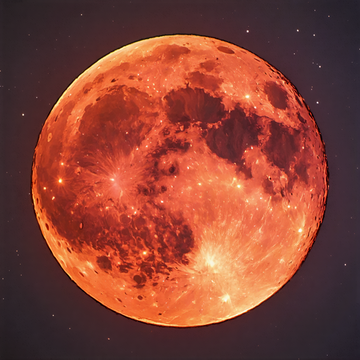
In March 2026, many people saw a very special Moon. During the total lunar eclipse on March 3, 2026, the Moon turned dark red or orange. NASA says people in East Asia and Australia could see totality in the evening. People in North and Central America saw it in the early morning. The eclipse was not visible in Africa or Europe. (science.nasa.gov)
Why did this happen? A total lunar eclipse comes when Earth moves exactly between the Sun and the Moon. Then Earth’s shadow falls on the Moon. This can happen only at full Moon. First, the Moon enters the faint outer shadow. Next, it moves into the dark inner shadow. In the March 2026 eclipse, totality began at 11:04 UTC and ended at 12:03 UTC, so the whole Moon stayed in Earth’s dark shadow for almost one hour. (science.nasa.gov)
But if Earth blocks the sunlight, why can we still see the Moon? The answer is Earth’s air. Some sunlight passes through Earth’s atmosphere and bends toward the Moon. Blue light scatters easily, but red and orange light travel more straight through the air. So the light that reaches the Moon is mostly red. This is the same reason sunsets often look red. In a simple way, you can think of it like this: at eclipse time, the red light from sunrises and sunsets around Earth softly paints the Moon. (nasa.gov)
There is one more secret. We do not have a lunar eclipse every month because the Moon’s orbit is tilted by about 5 degrees. Usually, the full Moon passes a little above or below Earth’s shadow. Only when the Sun, Earth, and Moon line up just right do we get this red Moon show. And the best part is that you do not need special equipment to enjoy it—just a clear view of the sky. (science.nasa.gov)