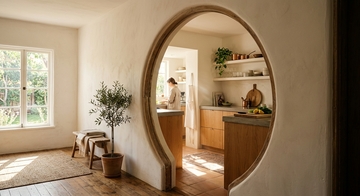
What is behind the door?
I open it.
Oh! The room is blue.
Blue walls. A blue chair.
A blue cup.
But my bag is red.
Red is my favorite color.
Then I see a small door.
It is red.
I open the red door.
Now the room is red.
Open a door.
Find your color.
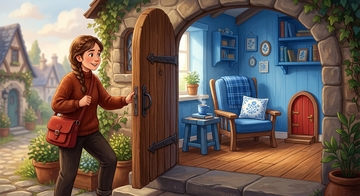
What is behind the door?
I open it.
Oh! The room is blue.
Blue walls. A blue chair.
A blue cup.
But my bag is red.
Red is my favorite color.
Then I see a small door.
It is red.
I open the red door.
Now the room is red.
Open a door.
Find your color.
ドアの向こうには何がある?
私はそれを開ける。
ああ! 部屋は青い。
青い壁。青い椅子。
青いカップ。
でも私のかばんは赤い。
赤は私の大好きな色。
そのとき小さなドアが見える。
それは赤い。
私は赤いドアを開ける。
今、部屋は赤い。
ドアを開けよう。
あなたの色を見つけよう。
「〜は(色)です」と物の色を表す基本文型です。be動詞 is を使います。
e.g. The room is blue.
訳: 部屋は青い。
「私は〜する」という現在の動作を表す最も基本的な文型です。
e.g. I open the door.
訳: 私はドアを開ける。
ドア、扉
e.g. I open the door.
訳: 私はドアを開ける。
部屋
e.g. The room is blue.
訳: 部屋は青い。
青い
e.g. A blue cup.
訳: 青いカップ。
赤い
e.g. My bag is red.
訳: 私のかばんは赤い。
かばん
e.g. My bag is red.
訳: 私のかばんは赤い。
小さい
e.g. I see a small door.
訳: 私は小さなドアを見る。
ドアの向こうに、ドアの後ろに
e.g. What is behind the door?
訳: ドアの向こうには何がある?
大好きな色、お気に入りの色
e.g. Red is my favorite color.
訳: 赤は私の大好きな色です。
ドアを開ける(新しい世界を見つける、というニュアンスも)
e.g. Open a door. Find your color.
訳: ドアを開けよう。あなたの色を見つけよう。