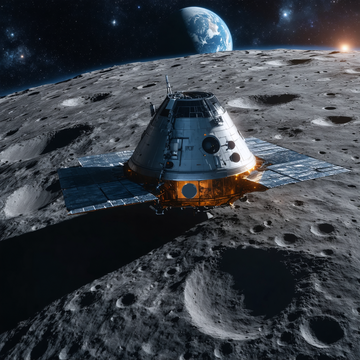
In April 2026, Artemis II changed from a dream into real history. NASA launched four astronauts on April 1 from Kennedy Space Center in Florida aboard the huge Space Launch System rocket. The mission was the first crewed journey toward the Moon in more than 50 years, the first since 1972, so many people around the world watched with excitement. For space fans, it felt like the beginning of a new age of exploration. (nasa.gov)
Inside the Orion spacecraft were NASA astronauts Reid Wiseman, Victor Glover, and Christina Koch, together with Canadian Space Agency astronaut Jeremy Hansen. Hansen made history as the first Canadian to take part in a lunar mission. Artemis II did not land on the Moon. Instead, Orion followed a free-return path: it flew around the Moon and used gravity to help guide the crew back home safely. During the mission, the spacecraft passed about 4,067 miles above the lunar surface at its closest point, and at its farthest point it reached 252,756 miles from Earth, setting a new human spaceflight distance record. (nasa.gov)
The mission lasted nearly 10 days and ended with a splashdown in the Pacific Ocean off the coast of California at 5:07 p.m. PDT on April 10, 2026. But the real goal was testing. With people on board, NASA checked how Orion performed during daily life in space, including exercise, spacesuits, emergency tools, procedures, and other important systems. These lessons will help NASA prepare for future Artemis missions, including flights that aim to return astronauts to the lunar surface and build experience for someday traveling to Mars. Artemis II was not only a trip around the Moon—it was a powerful step toward humanity’s future in deep space. (nasa.gov)