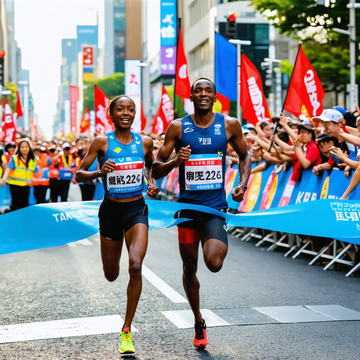
On March 1, 2026, the Tokyo Marathon gave fans a thrilling show. Kenya’s Brigid Kosgei won the women’s race in 2:14:29, setting a new course record. World Athletics said this time was an Asian all-comers’ record, and Tokyo Marathon organizers said it was also the seventh-fastest women’s marathon ever. In the men’s race, Ethiopia’s Tadese Takele defended his title in 2:03:37 after a dramatic sprint finish. Tokyo had also increased its field size to 39,000 runners for 2026, so the event felt huge for both elite athletes and ordinary runners. (worldathletics.org)
Why is running popular again now? One big reason is connection. Strava’s 2025 Year in Sport report says running remained the top sport on the platform, racing grew in 2025, and new clubs on Strava nearly quadrupled. Running clubs alone grew 3.5 times. The same report says Gen Z is 75% more likely than Gen X to say that a race or event is their main reason to exercise. This suggests that many people are not running only for fitness. They are also running to meet others, join a community, and challenge themselves. (press.strava.com)
Running also feels open to many kinds of people. Tokyo Marathon offers charity entry, virtual events, and a large expo before race day. Its 2026 charity program received applications from people in over 100 countries and regions, and the Virtual Tokyo Marathon 2026 allowed people to join from anywhere in the world through a running app. The Tokyo Marathon EXPO 2025 attracted 72,603 visitors, showing that running is now more than a sport. It is also travel, technology, charity, and shared excitement. That is why the new record in Tokyo mattered so much: it was not only a fast race, but also a sign of how strongly running has returned. (marathon.tokyo)