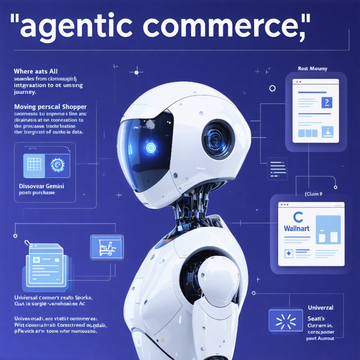
As of March 2026, “agentic commerce” means more than asking AI for shopping advice. It means the software can move from conversation to transaction. Google has built this change in stages. In May 2025, it introduced shopping in AI Mode, combining Gemini with the Shopping Graph, which contains more than 50 billion product listings and refreshes over 2 billion of them every hour. It also previewed agentic checkout: after a shopper sets the right price, size or color, Google can add the item to the merchant’s cart and complete checkout with Google Pay once the user confirms the details. In January 2026, Google expanded the idea with the Universal Commerce Protocol, an open standard for agent-led shopping from discovery to payment and even post-purchase support. (blog.google)
Walmart is advancing the same future from the retailer side. On June 6, 2025, it launched Sparky in the Walmart app, where the assistant helps shoppers search, compare products, summarize reviews and plan purchases for specific occasions. Walmart also said Sparky would grow into a broader retail companion, with future abilities such as automatic reordering, service booking, and multimodal understanding of text, images, audio and video. In other words, Walmart is not treating AI as a chatbot attached to a store; it is treating AI as a shopping layer that can sit across the whole customer journey. (corporate.walmart.com)
The most important signal came on January 11, 2026, when Walmart and Google announced plans to bring Walmart shopping directly into Gemini in the U.S. through Google’s Universal Commerce Protocol. According to the companies, linked accounts will let Walmart recommend items based on past online and in-store purchases, combine them with existing Walmart or Sam’s Club carts, and apply membership benefits. Walmart also highlighted fast fulfillment, including delivery in under three hours and, for some items, as fast as 30 minutes. (corporate.walmart.com)
Together, these moves suggest a new rulebook for online retail. In the old model, brands fought to be clicked. In the new one, they must also be readable, trustworthy and actionable for AI agents. That means structured product data, real-time prices, secure payment flows and permission-based personalization are becoming essential infrastructure, not optional extras. The real change is simple but profound: increasingly, shoppers may describe a goal, and the AI will handle the path to purchase. (blog.google)