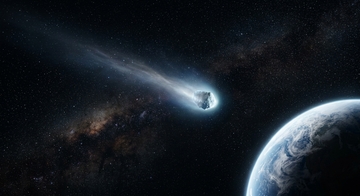
On March 18, 2026, NASA announced that the Hubble Space Telescope had accidentally captured comet C/2025 K1 (ATLAS) while it was breaking apart. Hubble was not supposed to study this comet at first; astronomers changed targets because of technical limits, and then discovered in the images that one comet had become several. The pictures, taken on November 8, 9, and 10, 2025, show at least four main fragments, and one smaller piece seems to split again. NASA says this is the earliest stage of comet breakup that Hubble has ever seen. (science.nasa.gov)
K1 had passed perihelion, its closest point to the Sun, on October 8, 2025. It came as close as 0.33 astronomical units, which is inside Mercury’s orbit. That close pass exposed the comet to intense heat and stress. Researchers estimate that the breakup began about eight days before Hubble observed it. Ground-based telescopes also recorded a major increase in brightness between November 2 and 4, but the fragmentation itself seems to have started one to three days before those bright outbursts. (science.nasa.gov)
So why do comets break? A comet is not a solid ball like a rock. It is a fragile mix of ice, dust, and rocky material. When a comet gets close to the Sun, its ice turns into gas and escapes in jets. Those jets can act like tiny rocket engines, making the nucleus spin faster and faster until it becomes unstable. Heating can also crack the surface, expose fresh ice, and trap pressure under a dusty crust before that dust is suddenly blown away. In K1’s case, scientists think strong outgassing after its close solar passage probably helped tear it apart. (arxiv.org)
This breakup is exciting because it lets scientists see material that was hidden inside the comet for billions of years. NASA says K1 already appears chemically unusual because it seems to have less carbon than many other comets. More analysis from Hubble’s instruments may reveal even more about what this ancient object is made of. The fragments are now about 250 million miles from Earth, moving through Pisces and heading out of the solar system, probably never to return. (science.nasa.gov)