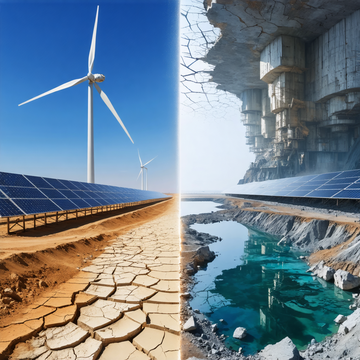
At first glance, decarbonization sounds morally simple: replace coal and oil with batteries, wind turbines, and solar panels. But the supply chain beneath that promise is far messier. A United Nations University report published on April 29, 2026 warns that the rush for lithium, cobalt, nickel, graphite, and rare earths is intensifying water insecurity, health risks, and environmental injustice in vulnerable regions. Meanwhile, the IEA projects that demand for critical minerals used in clean energy could at least double by 2030, and on a global net-zero pathway it could nearly triple. (unu.edu)
The sharpest contradiction is water. According to the UNU report, global lithium output in 2024 consumed an estimated 456 billion liters of water. In Chile’s Salar de Atacama, lithium mining accounts for up to 65% of regional water use, and water tables in brine-well areas fell by as much as nine meters between 1990 and 2015. The report also notes that 16% of critical mineral mining sites are in water-stressed areas and that 54% of energy-transition mineral projects are on or near Indigenous lands. In other words, the “green” economy can look much less green from the communities living beside the mines. (unu.edu)
The Democratic Republic of the Congo shows how unequal this bargain can become. Near mining areas, 72% of surveyed residents reported skin disease, while 56% of women and girls reported gynecological problems. About 30% of mining sites employ children, yet more than 80% of the country’s mineral output is controlled by foreign industrial mines, and 73.5% of the population lives on less than $2.15 a day. Clean technology may reduce tailpipes elsewhere, but too often it relocates harm instead of removing it. (unu.edu)
That is why the debate is shifting from “Do we need critical minerals?” to “Under what rules?” The UNU report calls for mandatory due diligence, binding standards for ethical sourcing, stricter wastewater controls, benefit-sharing with local communities, stronger Indigenous consent, and more recycling to reduce pressure on new mines. The broader UN process is moving in the same direction: after launching a panel on critical energy transition minerals in April 2024, the UN published guiding principles in September 2024 and created a Task Force in December 2025. Decarbonization still matters. But if the future is to be truly sustainable, it cannot be built on hidden sacrifice zones. (unu.edu)