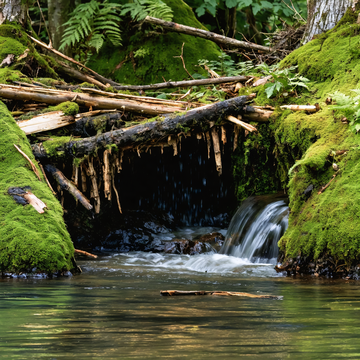
A beaver dam may look like a pile of sticks and mud. But new science says it can do something amazing for Earth. A study published on March 18, 2026, in a Nature journal found that beaver wetlands in Switzerland became a “carbon sink.” That means the place stored more carbon than it released. The scientists studied one stream area that beavers had changed for more than 10 years. (research.birmingham.ac.uk)
How can a small animal do this? When beavers build dams, water slows down. Then mud, dead wood, leaves, and other plant material stay in the area instead of washing away. Carbon gets trapped in wet soil, sediment, and wood, and some of it moves below the ground. In the study, the long-term carbon storage was almost ten times higher than in a similar stream without beavers. The researchers estimated about 1,194 tons of carbon could be stored over 13 years. (research.birmingham.ac.uk)
The story is not completely simple. In summer, when water levels dropped and more wet mud was open to the air, the area sometimes released more carbon dioxide for a short time. But across a full year, it still worked as a carbon sink. The researchers also found that methane, a powerful greenhouse gas, was very small at this site, making up less than 0.1% of the total carbon budget. (research.birmingham.ac.uk)
So, can beavers fix climate change by themselves? No. The scientists say more studies are needed, because this research looked at one place, and other places may be different. Still, the message is exciting: beavers are not just cute animals. They are natural engineers. Earlier research also showed that beaver dams can strongly change water flow and help river water quality. Sometimes, helping nature may begin with letting nature work. (livescience.com)