Have you ever told a secret to your phone late at night? For more and more teens, that is not a joke. A new JAMA Pediatrics study, published online in June 2026 and based on a national survey from November 2025, found that 19.2% of young people ages 12 to 21 had used an AI chatbot for mental health advice. Among those users, 42.8% did this at least once a month, 91.7% said the advice felt somewhat or very helpful, and 63.3% told no one. An earlier national survey had found 13.1% in 2024, so this use seems to be growing. (jamanetwork.com)
That may sound surprising, but chatbots are already part of teen life. Pew Research Center reported in December 2025 that 64% of U.S. teens ages 13 to 17 had used an AI chatbot, and about three in ten used one every day. (pewresearch.org)
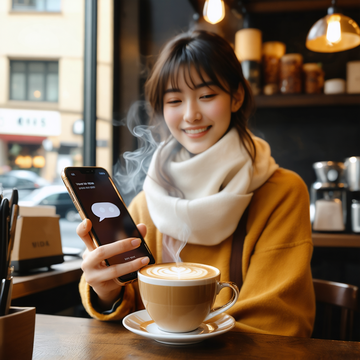
Now imagine Mia, a 16-year-old girl, awake in bed after a bad day at school. She does not want to worry her mother. She does not want her friends to laugh. So she opens a chatbot and types, “I feel alone.” The bot answers in two seconds. It sounds calm. It sounds kind. It always has time.
But here is the turn. Feeling helpful is not the same as being safe. In November 2025, Common Sense Media and Stanford Medicine said major chatbots were fundamentally unsafe for teen mental health support. Their testing found that bots often missed warning signs, got distracted, and became less safe in long, real-looking conversations. (commonsensemedia.org)
So maybe the real lesson is simple. AI can feel like a listener, but it is not a trusted adult, and it is not a therapist. If a teen is sharing fear, stress, or sadness with a chatbot, that should be the start of a human talk, not the end of one. (jamanetwork.com)