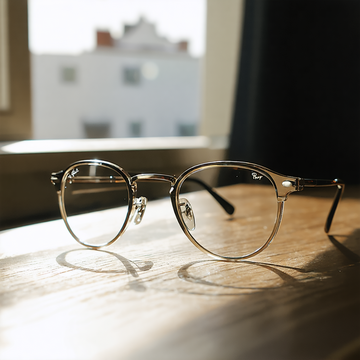
Smart glasses do not become ordinary when they look futuristic; they become ordinary when they stop demanding a compromise. That is why Meta’s March 31, 2026 announcement matters. Its new Ray-Ban Meta Blayzer Optics (Gen 2) and Scriber Optics (Gen 2) are the company’s first AI glasses designed specifically for people who actually depend on prescription eyewear all day. Meta says they support nearly all prescriptions and are built for comfort, with overextension hinges, interchangeable nose pads, and optician-adjustable temple tips. In the United States, preorders began at $499, with optical-retail availability starting on April 14 in the U.S. and select international markets. (about.fb.com)
That shift from “tech accessory” to “primary pair of glasses” is the real inflection point. Earlier smart glasses were often intriguing but peripheral: something you wore for a run, a demo, or a novelty video. Prescription-first design changes the logic. It suggests that Meta no longer wants smart glasses to be a second device, but the pair you put on in the morning and forget you are wearing. Meta’s broader lineup reinforces that ambition: the standard Ray-Ban Meta line starts at $379, while the more advanced Meta Ray-Ban Display starts at $799. Meanwhile, the software roadmap is becoming conspicuously mundane in the best possible sense: hands-free nutrition logging, WhatsApp message summaries and recall, Neural Handwriting, and pedestrian navigation rolling out across all U.S. cities in May 2026. The future here is not spectacle but habit. (about.fb.com)
The market now seems ready for that habit. Reuters, citing IDC, reported that global smart-glasses shipments reached 9.6 million in 2025, with Meta holding 76.1% of the market, and projected shipments of 13.4 million in 2026. Counterpoint likewise said global smart-glasses shipments rose 139% year over year in the second half of 2025, with Meta’s share reaching 82%. Even Meta’s display-equipped model faced supply constraints in January 2026 because of strong U.S. demand and limited inventory. In other words, the decisive breakthrough may not be a dazzling display at all. It may be the quieter moment when smart glasses become indistinguishable from the everyday object they were always trying to replace: your regular glasses. (streetinsider.com)