The idea is almost irresistible: if cities have too many empty offices and too few homes, why not turn one problem into the solution for the other? In the United States, the office-to-apartment pipeline reached a record 90,300 units at the start of 2026, up 28% from 70,600 a year earlier. Offices now make up 47% of all future adaptive-reuse projects, and the New York metro leads the country with 16,358 planned conversion units. (rentcafe.com)
Yet the numbers also show the limits of the idea. CBRE reports that in 2025, office conversions and demolitions together are set to remove 23.3 million square feet of office space from major U.S. markets, more than the 12.7 million square feet of new office construction expected this year. Since 2016, office-to-multifamily projects have created about 33,000 homes, with another 43,500 units possible if the current pipeline moves forward. That is meaningful, especially for struggling downtowns, but even CBRE says it will not come close to solving the wider housing shortage on its own. (cbre.com)
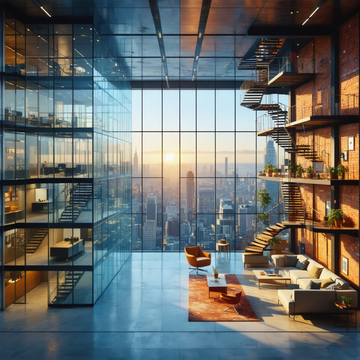
The architectural challenge is one reason. Converting an office tower is not like rearranging furniture. Apartments need daylight, ventilation, plumbing, and livable room layouts. According to NAIOP, an ideal residential floorplate is about 68 to 70 feet deep; many newer office buildings are much deeper, which makes natural light and plumbing far harder to manage. RentCafe’s 2026 report, drawing on Yardi data, also notes that “the right bones” matter: walkability, transit access, and multiple window exposures often decide whether a building can realistically become housing. (blog.naiop.org)
So, can conversion architecture save cities? Probably not entire cities—but it can help rescue specific districts. Governments are increasingly trying to make the math work: New York City has introduced tax incentives to encourage conversions that include affordable housing, Washington, D.C. offers a 20-year tax abatement for downtown commercial-to-residential projects, and Calgary’s incentive program now supports 21 office conversions that will create 2,628 homes from 2.68 million square feet of former office space. The broader lesson is that conversions work best not as a magic cure, but as one sharp tool in a larger urban strategy to bring residents, light, and life back to downtown streets. (nyc.gov)