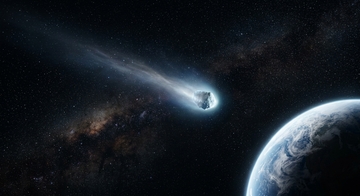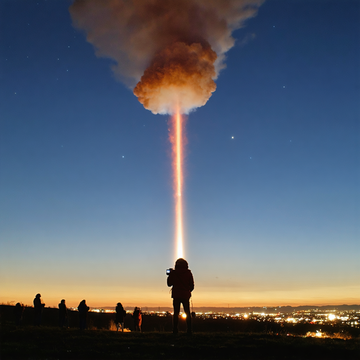
On the evening of March 8, 2026, people across Belgium, France, Germany, Luxembourg, and the Netherlands looked up and saw an amazing sight: a huge fireball crossing the sky. According to the European Space Agency (ESA), it appeared at about 18:55 CET and shone for around six seconds. It moved from southwest to northeast, left a bright trail, and then broke into pieces. Cameras from the European AllSky7 fireball network, along with many phones and home cameras, recorded the event. Some people even said they heard it from the ground. (esa.int)
This event is a good chance to learn an important English difference. A meteoroid is a small natural rock in space. When that rock enters Earth’s atmosphere and makes a bright streak of light, it is called a meteor. In everyday English, many people say “shooting star,” but it is not really a star. If part of the rock survives the hot trip through the atmosphere and reaches the ground, it becomes a meteorite. A very bright meteor is often called a fireball. (science.nasa.gov)
In this case, at least one house in Koblenz-Güls, Germany, was reportedly hit by small meteorite pieces, but ESA said there were no reports of physical injury. ESA’s early analysis suggests that the original object may have been up to a few metres wide. That may sound large, but space rocks of this size are not incredibly rare: ESA says they reach Earth from once every few weeks to once every few years. (esa.int)
One more surprising fact is that scientists probably did not see this object before it arrived. ESA explains that its direction and timing meant it likely came from a bright part of the sky near dusk, where large survey telescopes usually cannot detect such small objects. ESA says only 11 natural space objects have been successfully found before entering the atmosphere. So this fireball was not only beautiful and dramatic—it also reminds us how difficult it is to watch the sky and how important planetary defense research has become. (esa.int)