In the Netherlands, a new idea in housing is getting attention: the carbon-negative home. Instead of using mainly concrete, brick, and steel, these houses use natural materials such as timber, flax, hemp, straw, and wood fiber. Plants absorb carbon dioxide while they grow, and that carbon can stay locked inside the building materials for many years. The Dutch government is now pushing this “biobased” style of construction. Its national plan says that by 2030, at least 30% of new homes should be built with 30% or more biobased materials, and the government has set aside €200 million to help the market grow. (wur.nl)
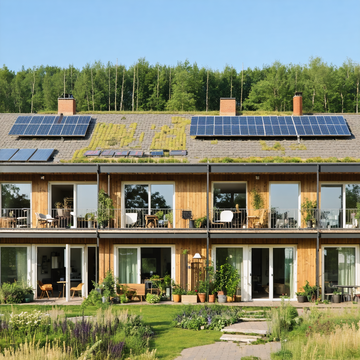
A recent Dutch example is in Marknesse, a village in Flevoland. There, housing association Mercatus and architecture firm ORGA created 12 affordable rental homes made from healthy, natural materials. The project was built in the first half of 2025, and in May 2026 it was introduced to a wider international audience. ORGA says the homes are about 75% biobased, and Mercatus also describes them as roughly three-quarters made from eco-friendly materials. (orga-architect.nl)
These homes are modern, but they also feel close to nature. The structure above ground is mainly natural material, with concrete used only in the foundations. The walls use timber and wood-fiber insulation, and the design avoids plastic foil so the house can “breathe” and manage indoor moisture more naturally. The homes also use heat pumps, rooftop solar panels, and a rainwater storage system for toilet flushing. Outside, there are green roofs, bird nests, and even wooden chimneys designed as bat homes. (archdaily.com)
The climate result is impressive. Mercatus says the 12 homes store 132.1 tons of CO2 in their materials. By comparison, 12 similar homes built in the usual way would have caused 427.5 tons of CO2 emissions. Residents’ first reports are positive too: the houses are quiet, stay cool on hot days, and need very little heating in cold weather. This makes the Dutch project more than a design experiment. It suggests that future homes can be comfortable, affordable, and good for the planet at the same time. (mercatus.nl)