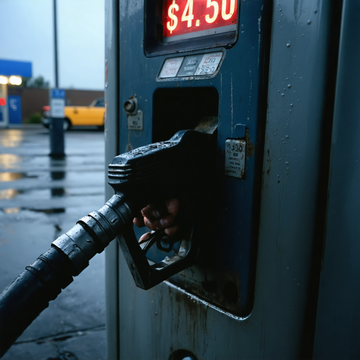
Gasoline prices are hitting Americans where it hurts most: in everyday life. In the University of Michigan’s preliminary survey for May 2026, U.S. consumer sentiment fell to 48.2 from 49.8 in April, the lowest reading on record. The survey director, Joanne Hsu, said about one-third of consumers mentioned gasoline prices on their own, and about 30% mentioned tariffs. She also said people still feel strong cost pressure, especially from rising prices at the pump. (sca.isr.umich.edu)
The numbers at gas stations help explain this bad mood. AAA said the national average price for regular gasoline was $4.504 per gallon on May 12, 2026. Just a few days earlier, AAA reported that the average had jumped 25 cents for a second straight week to about $4.55. That was roughly $1.40 higher than a year before and the highest national level since 2022. In other words, drivers are paying much more every time they fill up. (gasprices.aaa.com)
Broader inflation data show the same pressure. The U.S. Bureau of Labor Statistics said consumer prices rose 0.6% in April 2026 and were 3.8% higher than a year earlier. Energy prices increased 3.8% in just one month and accounted for more than 40% of the total monthly rise in consumer prices. Gasoline was one of the main reasons. At the same time, the Michigan survey found that one-year inflation expectations eased slightly to 4.5% in May from 4.7% in April, but that small improvement was not enough to change the public mood. (bls.gov)
This story is a good reminder that economics is not only about charts and markets. It is also about daily feelings. When fuel becomes expensive, people notice it immediately. The Michigan survey says worries about personal finances and buying conditions for major purchases have grown, and that helps explain why sentiment remains so weak. For many Americans in May 2026, the economy is not an abstract idea. It is the number glowing on the gas pump. (sca.isr.umich.edu)