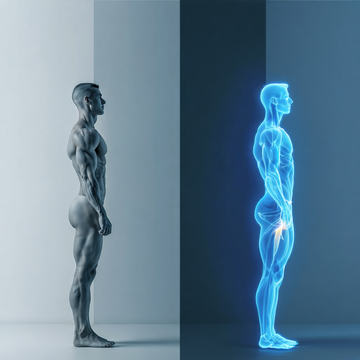
For decades, gym folklore has insisted that the most punishing workout must also be the most effective. That idea is looking increasingly antiquated. In eccentric exercise, the muscle produces force while lengthening—the controlled lowering phase of a squat, the descent of a push-up, the slow walk downstairs. What makes this mode so intriguing is its paradox: muscles can tolerate high forces during eccentric actions while the overall metabolic and cardiopulmonary cost remains relatively low. In other words, training does not always have to feel brutally hard to be productive. (ecu.edu.au)
The recent evidence is striking. A systematic review and meta-analysis published on March 18, 2026, pooling eight randomized controlled trials with 441 participants, reported that eccentric training produced moderate-to-large gains in strength and hypertrophy, with especially notable benefits in older adults and people with chronic obstructive pulmonary disease. An Edith Cowan University report published on April 23, 2026, went further in its practical message: simple home-based movements such as chair squats, heel drops, and wall push-ups can improve fitness without the theatrical suffering often associated with “serious” training. That claim is not merely promotional. A 2025 study on a daily five-minute eccentric program found improvements in muscle strength, flexibility, movement economy, and mental health in sedentary adults. (mdpi.com)
Still, the revolution should not be mistaken for a miracle. Eccentric work is famous for delayed-onset muscle soreness, especially when introduced too aggressively. Yet the field also recognizes the “repeated bout effect”: after initial exposure, the body becomes more resistant to the same muscle damage in later sessions. And not every eccentric innovation automatically outperforms conventional lifting; a 2026 meta-analysis of accentuated eccentric loading found broadly similar long-term adaptations to standard constant-load resistance training across many outcomes. The real lesson, then, is subtler than “eccentric beats everything.” Pain is a poor proxy for progress, and intelligent loading may matter more than machismo. (ro.ecu.edu.au)