For people with ALS or stroke, losing speech can also mean losing fast, natural conversation. Older communication tools can help, but they are often slow and may depend on eye, face, or hand movement. Brain-computer interfaces, or BCIs, try to solve this problem by changing brain signals into text or sound. In recent studies, this technology has moved closer to real use at home, not only in research labs. (nih.gov)
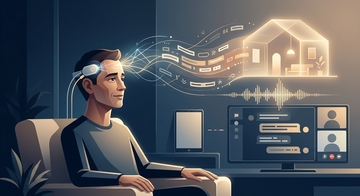
A strong example came from a study published on June 15, 2026. In that project, Casey Harrell, a man with ALS, used a BCI system in his own home. The system read brain activity when he tried to speak, showed words on a screen from a 125,000-word vocabulary, and also spoke them aloud with a digital version of his old voice. At first, researchers visited his home several times a week. Later, his caregivers learned to set up the system, and he began using it almost every day. After nearly 23 months, he had used it for more than 3,800 hours for face-to-face talks, video calls, email, and text messages. He rated 79% of more than 180,000 sentences as correct or mostly correct. (nih.gov)
Speed is also improving. On April 29, 2025, NIH described a system for a woman who had been unable to speak for 18 years after a stroke. It turned her brain activity into audible words in less than a quarter of a second. The system reached 47.5 words per minute with a large vocabulary, and 90.9 words per minute with a 50-word set. It also used recordings from before her stroke to create speech that sounded like her own voice. Then, on September 9, 2025, NIH reported another advance: some users could communicate through “inner speech,” or words in the mind, with less physical effort. Researchers also built safety steps, including a keyword “unlock” system that recognized the keyword more than 98% of the time, to help protect private thoughts. (nih.gov)
Big tech is starting to notice. On May 13, 2025, Apple said that iPhone, iPad, and Apple Vision Pro would add a new protocol for BCIs through Switch Control, so people with severe mobility disabilities could control devices without physical movement. This does not mean brain-speaking devices are already common products. Many are still in clinical trials. But the direction is clear: home communication tools are becoming faster, more personal, and more independent. (apple.com)