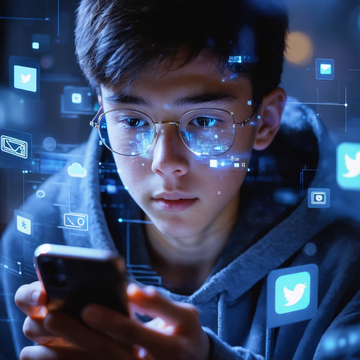
Many adults worry that social media is harming teenagers simply because they spend too many hours on it. But a new study suggests the story is more complicated. Researchers at the University of Edinburgh used data from the UK Millennium Cohort Study and followed more than 3,000 young people over time. After adjusting for earlier mental health, family life, and peer relationships, they found little evidence that low to average social media use at ages 11 and 14 strongly predicted later depression, anxiety, or self-harm. There was one important warning sign: heavier use at age 14 was linked to a small increase in suicide attempts by age 17. The researchers said that measuring only time or frequency is too simple to explain teen mental health. (eurekalert.org)
So if time is not the whole answer, what matters more? Another 2025 study from the University of Cambridge offers a clue. It looked at 3,340 UK adolescents and found that teens with mental health conditions, especially anxiety and depression, used social media differently from others. They were more likely to compare themselves with other users, feel less control over their time online, and have their mood changed by likes and comments. On average, they also reported spending about 50 minutes more per day on social media than teens without a mental health condition. The study did not prove cause and effect, but it showed that the online experience itself may be a key part of the risk. (cam.ac.uk)
Teenagers themselves describe social media as both helpful and stressful. In a Pew Research Center survey published on April 22, 2025, 45% of U.S. teens said they spend too much time on social media. At the same time, 74% said it helps them feel connected to friends, and 63% said it gives them a place to show their creative side. Still, 45% said it hurts their sleep, and teen girls reported more negative effects on mental health than boys. (pewresearch.org)
The latest research points to a clear message: for teen mental health, the biggest question may not be “How long are you online?” but “What happens to you when you are there?” Social media can support friendship and creativity, but it may become risky when it encourages comparison, emotional dependence on feedback, or unhealthy habits. (sciencedirect.com)