Humanity has returned to the Moon’s neighborhood. NASA’s Artemis II mission launched on April 1, 2026, with four astronauts aboard Orion: Reid Wiseman, Victor Glover, Christina Koch, and Canada’s Jeremy Hansen. After a nearly 10-day journey around the Moon, the spacecraft splashed down safely in the Pacific Ocean on April 10. The mission was the first crewed lunar flyby in more than 50 years, and the crew traveled farther from Earth than any humans before. The team also represented a new chapter in space history, including the first woman, the first person of color, and the first Canadian on a lunar mission. (nasa.gov)
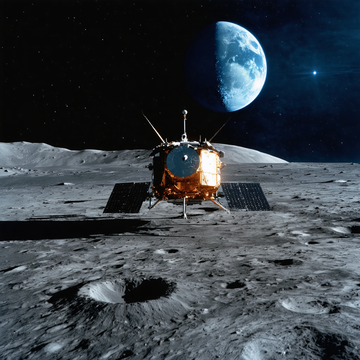
The most exciting moment came on April 6, when Orion passed around the Moon’s far side—the side that never faces Earth. During a seven-hour flyby, the astronauts photographed places that humans had never seen directly before. They described sharp impact craters, old lava fields, and long cracks and ridges on the surface. Just before Orion disappeared behind the Moon, the crew captured a beautiful “Earthset,” with our blue planet sinking behind the gray horizon. A little later, they also photographed a thin crescent Earth rising again. Even more dramatic was a rare view of the Moon fully blocking the Sun, creating almost 54 minutes of totality. (nasa.gov)
Artemis II did not land on the Moon. It was a test flight designed to prove that NASA’s Orion spacecraft, SLS rocket, and mission teams are ready for deeper exploration. NASA says the mission’s data and experience will help prepare for Artemis III and later flights that aim to return astronauts to the lunar surface. For many people, though, the real power of Artemis II was emotional as well as scientific: the far side of the Moon no longer feels so distant. Through the astronauts’ windows, it became a real place again—silent, rough, and waiting for humanity’s next step. (nasa.gov)