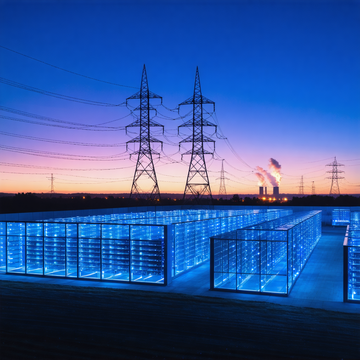
AI seems invisible, but it lives in real buildings. A data center is a large building full of servers. These computers work all day and all night, so they need a steady flow of electricity. They also need powerful cooling systems, because the machines create a lot of heat. Virginia’s JLARC says a small data center may need 5 to 20 megawatts of power, while a large one may need 100 megawatts or more. Berkeley Lab says AI is pushing demand higher because AI servers use more electricity and need more cooling. Across the United States, data centers used about 4.4% of all electricity in 2023, and that share could rise to 6.7% to 12% by 2028. (jlarc.virginia.gov)
In Virginia, this matters more than almost anywhere else. Northern Virginia is the world’s largest data center market, holding about 13% of reported global operating capacity. JLARC found that Virginia’s electricity demand was almost flat from 2006 to 2020, but it could double within the next 10 years, mainly because of data centers. That is why the state is rethinking the boom. On November 25, 2025, Virginia’s State Corporation Commission created a new electricity rate class for very large users, including data centers using 25 megawatts or more, and required many of them to cover more of the cost of new grid infrastructure. On March 6, 2026, Virginia Mercury reported that lawmakers were still fighting over whether big new projects should face stronger state review. (jlarc.virginia.gov)
The hard part is clean energy. Virginia’s energy policy aims for carbon-free electric power by 2045. But JLARC said it will be very difficult to build enough new generation and transmission fast enough, even if the state meets only half of its highest demand forecast. The report says that case would still need steady growth in solar power, energy storage, new nuclear power, and more transmission lines. So the question in Virginia is not only “How do we power AI?” It is also “Who pays for it, and can we do it without slowing climate goals?” That is why this local issue now feels like a national one. (energy.virginia.gov)