More than 50 years after Apollo 17 in 1972, humans flew around the Moon again. NASA’s Artemis II mission launched on April 1, 2026, from Kennedy Space Center in Florida. Four astronauts were on board: Reid Wiseman, Victor Glover, Christina Koch, and Canadian astronaut Jeremy Hansen. They rode in the Orion spacecraft on NASA’s powerful SLS rocket for a trip around the Moon and back to Earth. (nasa.gov)
Artemis II was not a Moon landing mission. It was a test flight, but it was still historic. NASA wanted to check Orion’s systems with people inside for the first time. Orion also used ESA’s European Service Module, which gave the spacecraft power, air, water, and propulsion. After circling Earth, the crew started a four-day journey to the Moon and followed a safe path home. (nasa.gov)
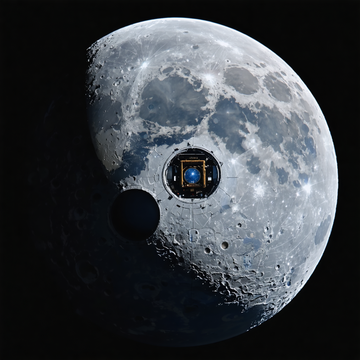
The most exciting part came on April 6. During a seven-hour lunar flyby, Orion passed behind the Moon and came as close as about 4,067 miles above the surface. At its farthest point, the spacecraft reached 252,756 miles from Earth, setting a new record for the greatest distance humans have traveled from our planet. The astronauts also took pictures of the lunar far side, watched “Earthset” and “Earthrise,” and even saw a nearly hour-long solar eclipse. (nasa.gov)
The mission ended successfully on April 10, 2026, when Orion splashed down in the Pacific Ocean off the coast of San Diego. The whole trip lasted about 10 days. Artemis II was the first crewed flight of the Artemis program and the first time astronauts had traveled to the Moon in more than half a century. For many people, it felt like the start of a new age of exploration—and a big step toward future missions to the Moon and, one day, Mars. (nasa.gov)