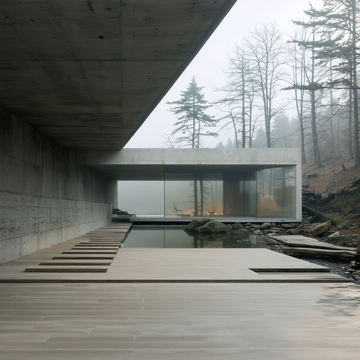
The 2026 Pritzker Architecture Prize was awarded to Chilean architect Smiljan Radić Clarke, the 55th laureate. His work offers a clear lesson for today’s architects: a building does not need to dominate nature to be powerful. Again and again, Radić studies the site first—its ground, weather, light, and memory—and then lets the design grow from those conditions. At Restaurant Mestizo in Santiago, part of the building is set into the earth. At Pite House on the Chilean coast, the form responds to strong wind and harsh light. This approach makes architecture feel less like an object dropped onto land and more like a careful guest. (pritzkerprize.com)
Materials are just as important in Radić’s work. The Pritzker jury praised his “material experimentation,” but what is striking is how simple many of his materials are. He uses concrete, stone, timber, glass, membranes, and even chain-link curtains with great care. In the 2014 Serpentine Pavilion in London, a translucent fiberglass shell rested on large locally sourced stones, creating shelter while keeping visitors connected to the park. In Teatro Regional del Biobío, a semi-translucent skin controls light and supports sound. The message is simple: materials are not only for appearance. They shape mood, weight, sound, and even the way people move. (pritzkerprize.com)
Radić also shows how architecture can bring nature inside human life without becoming sentimental. In his home studio in Santiago, single-pane glass allows people to feel rain, sound, and changing light, while an earthen berm filters sunlight and frames views of nature. For English learners, this is a useful idea to remember: good architecture is not always loud or high-tech. Sometimes it is quiet, honest, and deeply human. By respecting local materials and the character of a place, Radić’s buildings teach us that the most memorable spaces are often the ones that help us notice the world around us. (pritzkerprize.com)