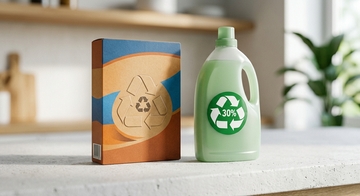
When you see “recyclable” and “made with recycled material” on a package, they may sound like the same thing. However, they answer two different questions: What can happen to the item later, and where did its material come from?
“Recyclable” describes what may happen after you use the product. A recyclable item can be collected, processed, and turned into a new product. However, this does not mean that it already contains recycled material. Also, an item may be technically recyclable but not accepted by your local recycling program. Even the number inside a triangle on plastic only identifies the type of plastic. It does not guarantee that the item can go into your recycling bin. (epa.gov)
“Made with recycled material” describes the item’s past. It means that some material was recovered during manufacturing or after people used it, instead of being thrown away. A label may say, for example, “made with 30% recycled plastic.” It is important to check the percentage because the rest may be new material. A product containing recycled material is not always recyclable, especially if it combines different materials or has a special coating. (ftc.gov)
In Japan, familiar plastic and paper identification marks help people separate containers and packaging. However, these marks do not show how much recycled material the package contains. (meti.go.jp)
When shopping, ask three simple questions. First, does the claim describe the product, the package, or both? Second, is there a recycled-content percentage? Finally, can your local program actually collect the item? Be careful with broad words such as “green” or “eco-friendly,” because they may not explain a specific environmental benefit. (ftc.gov)
A useful way to remember the difference is this: “recycled material” looks at the past, while “recyclable” looks toward the future.