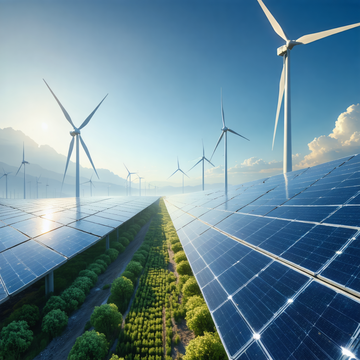
The world reached a big energy milestone in 2025. Renewable energy, such as solar, wind, and hydropower, rose to about 49.4% of global installed power capacity. In simple words, almost half of the world’s power equipment is now renewable. The world added a record 692 gigawatts of renewable capacity in 2025, and the total reached 5,149 gigawatts. Solar power was the main reason for this jump, and renewables made up 85.6% of all new power capacity added last year. (theregister.com)
But one word is important here: “capacity.” Capacity means the maximum amount of electricity a power plant can produce. It is not the same as the electricity it actually makes every day. So “almost half” does not mean renewables already supply half of the world’s electricity. IRENA defines renewable power capacity as the maximum net generating capacity of renewable plants, and the IEA says renewables provided about 32% of global electricity generation in 2024, while coal was still the biggest single source at 35%. (irena.org)
Even so, the direction is clear. The IEA says renewables are expected to pass coal as the world’s largest source of electricity by the end of 2025, or by mid-2026 at the latest if hydropower is weaker. It also expects renewables to produce 43% of global electricity by 2030. Much of this growth is coming from solar, because solar panels can be installed quickly on homes, factories, and large solar farms. (iea.org)
There are still challenges. In IRENA’s 2025 report, Asia was the center of renewable growth, and China alone contributed almost 64% of new renewable capacity in 2024. The IEA also says that as solar and wind grow fast, countries need stronger grids, more storage, and better planning. So this new record is not the finish line. It is a strong sign that the world’s energy map is changing fast. Solar panels and wind turbines are not only the future now. They are already part of everyday life. (irena.org)