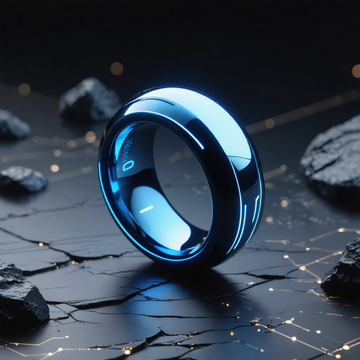
Ultrahuman’s return to the United States is not just a comeback story. It is also a sign that the smart ring market is becoming much more competitive. On March 24, 2026, the company announced U.S. pre-orders for the Ring PRO after receiving clearance from U.S. Customs and Border Protection. Ultrahuman says the new ring offers up to 15 days of battery life, or more than 45 days when used with the new PRO Charging Case. The device also adds 250 days of on-device storage, a redesigned heart-rate sensing system, a dual-core processor, and optional “PowerPlugs” for extra health features. In the U.S., the Ring PRO is sold as a one-time purchase, with the official price listed at $479, while Ultrahuman continues to emphasize subscription-free core insights. (cyborg.ultrahuman.com)
Why does this matter? Because Ultrahuman is stepping back into a market where the main rivals are already strong. Oura’s Ring 4 promises 5–8 days of battery life and puts much of its experience behind an Oura Membership that costs $5.99 per month or $69.99 per year in the U.S. Samsung’s Galaxy Ring starts at $399.99 and is closely tied to the Samsung Health app, Galaxy AI features, and the wider Galaxy device ecosystem. In other words, the battle is no longer only about counting steps or tracking sleep. It is also about battery life, app quality, AI coaching, and whether users are willing to pay a monthly fee after buying the ring itself. (ouraring.com)
The background makes Ultrahuman’s return even more dramatic. In 2025, Oura said a final U.S. International Trade Commission ruling enforced exclusion and cease-and-desist orders that effectively banned the import and sale of Ultrahuman smart rings in the U.S. market. Now, less than a year later, Ultrahuman is back with a new flagship model. For consumers, that means more choice. For the industry, it means the smart ring race is accelerating again. The most interesting question now is not whether smart rings can become mainstream, but which company will define what “personal health” on your finger should really mean. (ouraring.com)