Artemis II is now a real part of space history. On April 1, 2026, NASA launched the mission from Kennedy Space Center in Florida. Four astronauts flew in the Orion spacecraft on the SLS rocket: Reid Wiseman, Victor Glover, Christina Koch, and Jeremy Hansen from Canada. This was the first crewed Artemis mission, and the first human trip around the Moon area since Apollo 17 in 1972. (nasa.gov)
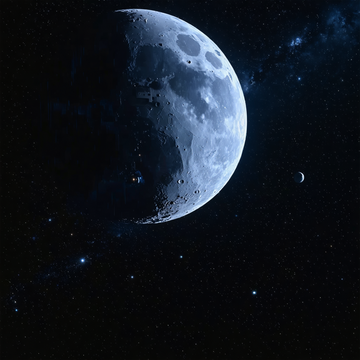
The trip lasted a little more than nine days. The crew did not land on the Moon. Instead, they made a flyby, which means they went around it and came back to Earth. After leaving Earth orbit, Orion headed toward the Moon. On April 6, the astronauts flew past it, took clear photos, and looked at parts of the far side that humans cannot see from Earth. Then, on April 10, 2026, the spacecraft splashed down safely in the Pacific Ocean near San Diego. (nasa.gov)
Artemis II was not only an exciting trip. It was also an important test. NASA used this mission to check Orion and SLS with people on board in deep space. What NASA learned will help future Moon missions and later trips to Mars. The mission was also special for Canada, because Jeremy Hansen became the first Canadian to go on a mission around the Moon. (nasa.gov)
Why does Artemis II matter so much? Because it connects the past and the future. For more than 50 years, no humans had gone this far toward the Moon. Now they have gone again. Artemis II shows that space exploration is moving forward, one careful step at a time. It is a powerful reminder that big dreams can wait a long time, but they can still come true. (nasa.gov)