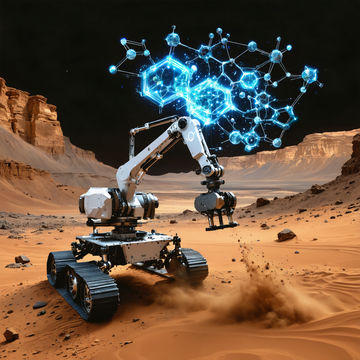
NASA’s Curiosity rover has found exciting new clues on Mars. In a report released on April 21, 2026, NASA said a rock sample called “Mary Anning 3,” drilled in 2020, contained the greatest variety of organic molecules ever found on the planet. Scientists identified 21 carbon-containing molecules in the sample, and seven of them had never been detected on Mars before. (jpl.nasa.gov)
Organic molecules are chemicals that contain carbon. They matter because life on Earth uses them, but they can also be made without life. So this discovery does not mean NASA has found life on Mars. Still, the sample came from a clay-rich area on Mount Sharp where lakes and streams existed billions of years ago, and clay is known to help preserve old molecules. That makes the finding especially important. (jpl.nasa.gov)
The new study in Nature Communications reported more than 20 organic molecules, including benzothiophene and a possible nitrogen-containing ring molecule called an N-heterocycle. This is exciting because nitrogen ring structures are linked to the chemistry behind RNA and DNA. NASA also said this was the first possible detection of an N-heterocycle on the Martian surface and the first confirmation of both naphthalene and benzothiophene there. (doi.org)
This news builds on another Curiosity result from March 24, 2025. In that study, scientists found decane, undecane, and dodecane, the largest organic molecules yet seen on Mars, in an older sample called “Cumberland.” A follow-up NASA report from February 6, 2026, said that the non-biological sources tested by researchers could not fully explain the amount of these compounds, though more study is still needed. Step by step, Curiosity is showing that ancient Mars had rich chemistry and may once have had conditions that could support life. (science.nasa.gov)