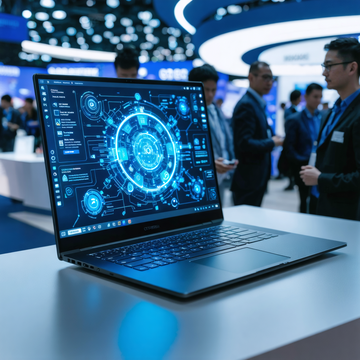
Have you noticed how a laptop ad now sounds a little like a robot ad? At COMPUTEX 2026 in Taipei, from June 2 to June 5, AI was everywhere. The show used the theme “AI Together” and brought together 1,500 exhibitors from 33 countries across more than 6,000 booths. But the real surprise was this: the event was not only about AI notebooks. The official message was that AI is moving out of the cloud and into real places like factories, robots, and smart mobility. (computextaipei.com.tw)
Still, the AI notebook was one of the clearest products on the floor. Microsoft says a Copilot+ PC needs an NPU that can deliver more than 40 TOPS. ASUS showed both everyday Copilot+ laptops, like new Zenbook and Vivobook models, and higher-end ProArt laptops for creators. NVIDIA also used COMPUTEX to launch RTX Spark, a platform for thin Windows laptops coming this fall from ASUS, Dell, HP, Lenovo, Microsoft Surface, and MSI, with up to 128GB of unified memory and up to 1 petaflop of AI performance. (microsoft.com)
Now imagine Ken on a morning train. He wants fast translation, quick file search, and private AI work that stays on his device. For him, an AI notebook sounds useful. But if Ken mostly checks email, writes reports, and joins video calls, the question changes. Does he really need the expensive new machine yet? That question matters because IDC now expects global PC shipments to fall 11.3% in 2026, while average PC prices rise 18.3%, mainly because of memory shortages. (idc.com)
So, are AI notebooks the next standard? Maybe in design, yes. Chip makers, PC brands, and Windows are all pushing in that direction. But in daily life, the new standard is not fully here yet. At COMPUTEX 2026, AI notebooks looked less like the finish line, and more like the first normal step toward it. (blogs.windows.com)