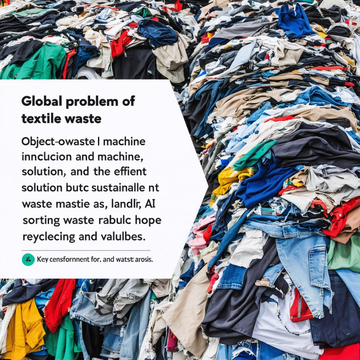
Old clothes are becoming a big trash problem around the world. In the European Union, the average person bought 19 kilograms of clothing, shoes, and home textiles in 2022. In the same year, EU countries made about 6.94 million tonnes of textile waste, or 16 kilograms per person. The European Environment Agency says 85% of household textile waste in the EU was not collected separately in 2022, so much of it went to landfill or was burned. In the United States, NIST says about 85% of used clothes and textiles went to landfills and incinerators in 2018. (eea.europa.eu)
Now a new AI machine in China is offering hope. In April 2026, AP reported that DataBeyond’s Fastsort-Textile machine was working at a recycling factory in Zhangjiagang, China. The machine uses AI to check what old clothes are made of and then sorts them by material. It was installed at Shanhesheng Environmental Technology in 2025, and AP said this was the only place in China using it at the time. The machine can sort 100 kilograms of clothes in two to three minutes. A worker would need about four hours to do the same job, and the machine can handle about two tons per hour. (apnews.com)
This matters because sorting clothes is not easy. Many clothes are made from mixed materials, and labels can be wrong or missing. NIST explains that near-infrared technology can read a fabric with special light, and AI can help make the sorting more accurate. At the Chinese factory, the share of clothes judged not recyclable fell from as much as 50% to 30% after the new machine started working. AP also reported that synthetic textiles, which are made from fossil fuels, now account for around 70% of global textile production. (nist.gov)
AI will not fix fashion waste by itself. People still need to buy less and reuse more. But this new machine shows a bright idea: with better technology, an old shirt may become useful again instead of ending as trash. (eea.europa.eu)