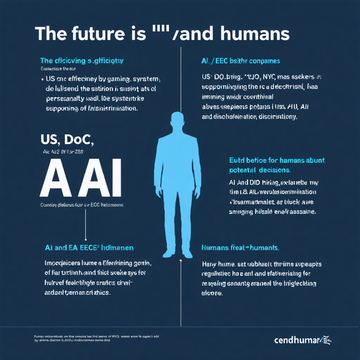
In 2026, AI is changing hiring on both sides. Job seekers are expected to use AI more when they apply, and companies are also using AI more in recruiting work. SHRM reports that 78% of recruiting executives expect more candidates to use AI in applications, and 73% expect more AI in recruiting tasks. But SHRM also says average cost-per-hire and time-to-hire have increased over the past three years, even as generative AI use has grown. (shrm.org)
This creates a new situation: AI may help write an application, and another AI may help read it. That can save time, but it can also make hiring feel less human. SHRM warns that the process can become frustrating, impersonal, and easy to “game” if people depend too much on automation. Still, AI is not only a problem. LinkedIn’s 2025 recruiting report says companies whose recruiters use AI-Assisted Messaging are 9% more likely to make a quality hire than companies that use it the least. So AI seems most useful when it supports people, not when it replaces them. (shrm.org)
Because of these risks, rules are growing. In New York City, employers cannot use an automated employment decision tool unless it has had a bias audit within one year, the audit summary is public, and job candidates receive notice. Enforcement began on July 5, 2023. In the U.S., the Department of Labor released an AI & Inclusive Hiring Framework in September 2024 to help employers reduce discrimination and accessibility barriers, especially for disabled job seekers. The EEOC also says workers can contact the agency if they believe AI or other automated technology was used in a discriminatory way. (nyc.gov)
This change is global. The European Commission says AI tools used in employment, such as CV-sorting software for recruitment, are considered high-risk under the EU AI Act. The transparency rules start in August 2026, and the high-risk AI rules apply in August 2026 and August 2027, depending on the system. (digital-strategy.ec.europa.eu)
The future of hiring is not “AI or humans.” It is probably “AI and humans.” The real question is simple: can companies use smart tools and still make fair, human decisions? (shrm.org)